UA
UA 
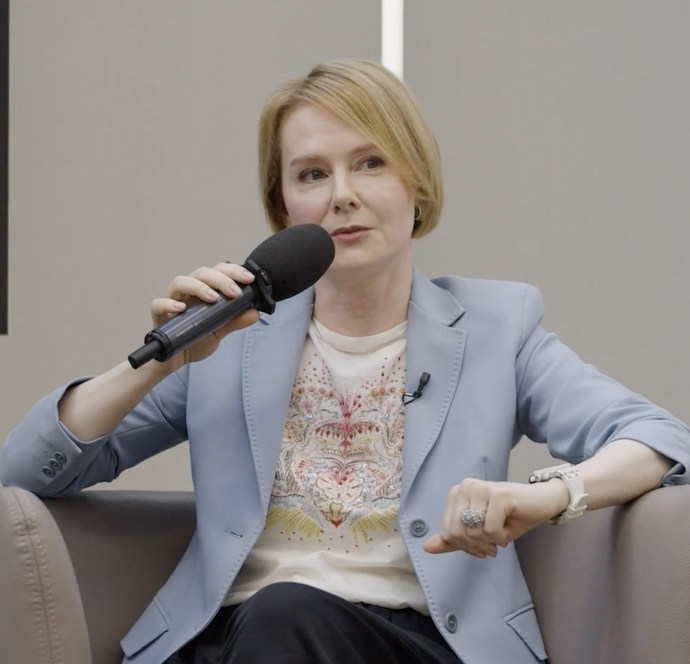
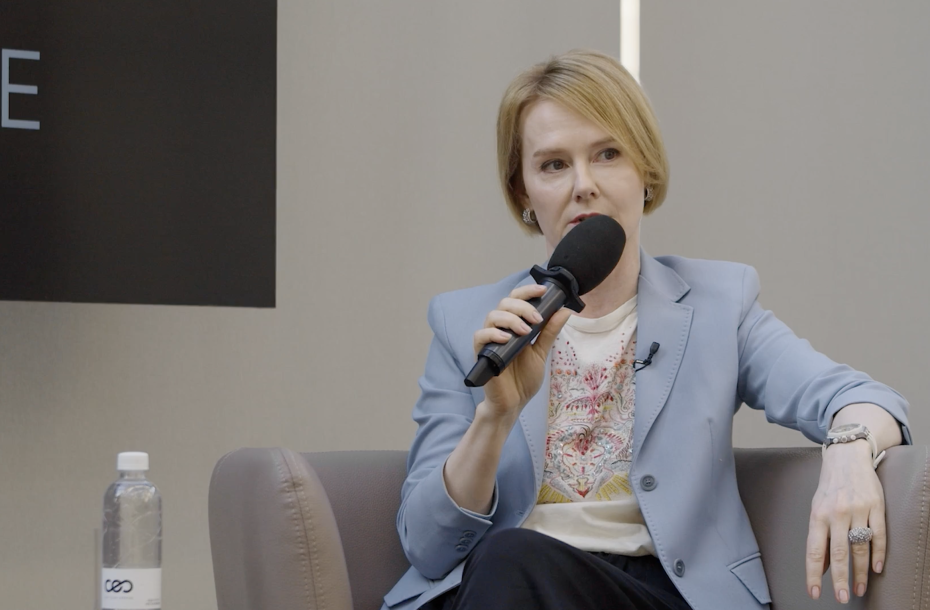
Western donors have focused on fighting corruption and keeping Ukraine's budget stable – and have almost entirely lost sight of the business climate. This is the wrong path: the economy that is supposed to deliver reconstruction and EU accession grows out of domestic entrepreneurship, not donor tranches. What needs to change in partners' priorities and in the state's own habits – Lana Zerkal, member of the Coordination Council at Ukraine Facility Platform, explained at a meeting with the CEO Club business community.

EU vulnerabilities: room for win-win cooperation
European countries have changed the way they think about security. Germany, for one, has moved away from Russian gas and focused on building up its infrastructure, defence, and industrial policy without it. This is a breathtaking shift.
Ukraine has the potential to cover part of these needs. Until now, Ukrainian producers were capable of flooding European markets with sugar, metal, or other products. That prospect worries European businesses, irritates European politicians, and ultimately creates tension between countries.
Ukrainian entrepreneurs may be better served by paying attention to what Europe actually needs. For example, EU countries import 70–80% of their proteins from China. In an effort to reduce that dependence, Europe is introducing protective tariffs, which drives up prices and sends entire sectors of the economy into fever. Ukraine could replace part of the imports from China and resolve a genuinely painful issue for its EU partners.
EU integration will require a new role for business and local communities
Western partners concentrate on anti-corruption, macro-financial, and budgetary matters while paying no attention at all to Ukraine's business climate, according to an analysis by the CASE Center for Social and Economic Research commissioned by the European Parliament's Committee on Budgets. In Lana Zerkal's assessment, under this approach Ukraine will never be able to develop its economy on its own, because that development has to be built on the achievements of domestic business. Creating the conditions for entrepreneurship to grow is its precondition – and without it, there is no point counting on EU accession either.
In the course of EU integration, Ukraine must complete nearly one hundred and fifty tasks across 35 chapters and six negotiation clusters. Each EU country will closely track progress in specific sectors. The Netherlands, for instance, will scrutinise Ukraine's record on the rule of law – which covers not only corruption but the performance of courts and law enforcement in general. Germany and Poland will focus on internal market regulation.

The European Union assesses not only the legislation adopted but also how it is applied in practice. The findings feed into a document that, under the procedure, must be ratified by the parliaments of all 27 EU member states.
Europe operates on the principle of subsidiarity: problems should be solved at the lowest level, closest to the citizens. Ukraine will therefore have to completely rethink the philosophy of relations between central and local government. Competences and capabilities must shift from the centre to communities and regions. It is communities that should decide how to develop their infrastructure and social services, with what money, and how to support business in their area.
Outside support: the role of the US and the EU
Last year, the G7 leaders' summit ended without a joint declaration, and the United States avoided any decisions on Ukraine across all platforms. This year, by contrast, Ukraine is receiving cautiously positive signals from both the UN and the G7. It is a major achievement for Ukraine that the issues that matter to it remain in the focus of Europe and, especially, the G7.
Ukraine is capable of holding out for quite a long time with limited US support. The United States now acknowledges Ukraine's successes on the battlefield. The expectation that Ukraine would sell weapons of its own design to America, however, has not materialised: a US company has already drawn on Ukrainian experience in its drone production.
The United States itself relied on flawed data when assessing its chances of winning the war against Iran. As a result, the blockade of the Strait of Hormuz turned out to be a far greater point of leverage than expected.
The worst-case scenario for Ukraine is a political crisis in the US, which would leave Washington absorbed in domestic politics and Ukraine out of the picture. At the same time, whenever the US gets distracted, European partners step up their support for Ukraine.