UA
UA 
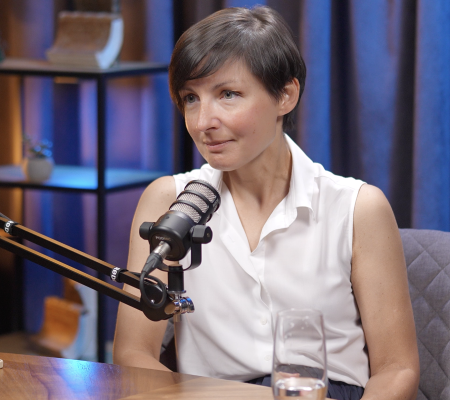
In September 2026, Ukraine's updated GMO legislation takes effect, bringing order to a sector that has long operated as a grey market: some of its soy and maize is genetically modified, even though the country officially has no GM crop production. On the UAFP’s podcast, Olga Trofimtseva, Sectoral leader for Agriculture & Biodiversity at Ukraine Facility Platform, explains what this means for farmers, and why it is neither a ban nor a green light, but a step towards EU rules.
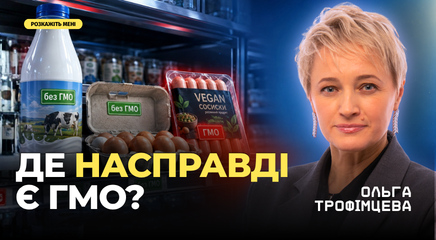
What is a GMO?
A genetically modified organism (GMO) is not evil – but nor is it a magic wand that solves every problem. It is simply a technology used to alter the genes of plants to improve certain of their properties. It has been on the market for a long time, so there is certainly no reason to demonise it.
There are plenty of myths surrounding GMOs. Let us dispel a few.
- Myth 1: GM products are banned in Europe.
GM products are not banned in Europe, but their use is strictly regulated.
- Myth 2: GM products are harmful.
There is no scientific evidence that GM products harm human or animal health.
- Myth 3: 'GMO-free' means organic.
'GMO-free' is not the same as organic. Organic is a separate, voluntary and higher standard of production and processing – no synthetic pesticides, fertilisers or other plant protection products, and annual checks along the entire 'farm to fork' chain.
Why GMOs are used
How has GM technology changed the way soy is grown? Soy goes into animal feed, but it is a crop that weeds easily choke out. Genetic modification gave it a gene that makes it resistant to a particular herbicide, so farmers can treat a whole field with that herbicide, killing the weeds without harming the crop. This has made life much easier for farmers.
Weeds are not the only problem. Scientists have also worked on helping wheat and barley withstand drought, proposing changes to wheat's genetic structure to make it drought-resistant. The plant could adapt to such conditions on its own – but that might take, say, 100 years, whereas genetic modification achieved the same result far faster.
Why Europe wants GMO-free soy
People who do not eat meat depend on soy: plant-based meat substitutes are most often made from soy protein, and less often from pea or wheat protein. In the European Union, only GMO-free – and often organic – soy is used for this.
Ukraine supplies GMO-free soy to Europe: its farmers follow strict rules to supply the EU with soy that is then turned into tofu, plant-based steaks, sausages and yoghurts. The stricter the rules, the higher the price premium. For animal feed, by contrast, EU countries import large volumes of soy from South America, most of it genetically modified.
A state register from September: an end of the grey market in Ukraine
Officially, Ukraine has no GM crop production. Yet a grey market exists: some soy, and even some maize, is genetically modified in practice, though no official figures exist. The updated GMO legislation, which takes effect in September 2026, is meant to bring this into the open. To work with GMOs, farmers will have to register with the state, and their products will be monitored and labelled to EU standards.
For consumers, it will mean that a 'GMO-free' label is truthful, not just a marketing ploy – and it will not push up food prices.
Some Ukrainian farmers will choose not to grow GM crops at all, aiming instead to supply the European market and its almost 500 million affluent consumers, who set the trends in healthy eating. Others will grow and export GM crops, competing on price with Argentina, Brazil and the United States.
Growing GM and non-GM crops side by side, however, is a serious challenge: to keep the two from mixing, a producer needs two parallel 'farm to fork' chains – separate machinery, separate storage, and so on. That is why few take on both; most focus on a single niche.