UA
UA 
For Ukraine, agricultural processing is a chance to move from competing largely on raw commodities to integrating more deeply into European supply chains as a supplier of value-added products — particularly in segments where the EU remains dependent on imports from third countries.
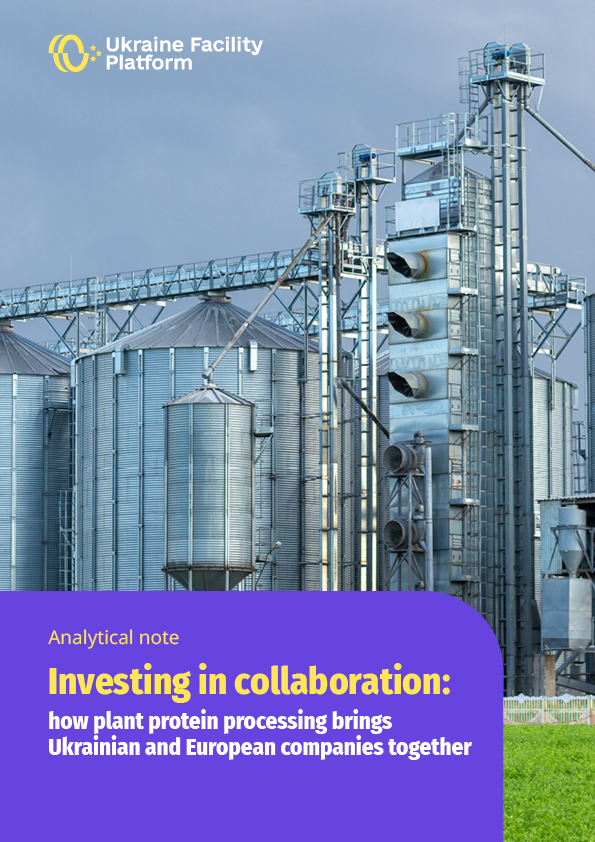
One such segment — where EU demand is high and two-thirds of supply is imported — is the processing of high-protein plant material, Oksana Osmachko, strategic expert on Agriculture & Biodiversity at the Ukraine Facility Platform, writes in the analytical note. In the EU, plant proteins are used both in feed for livestock and poultry and in a range of food products.
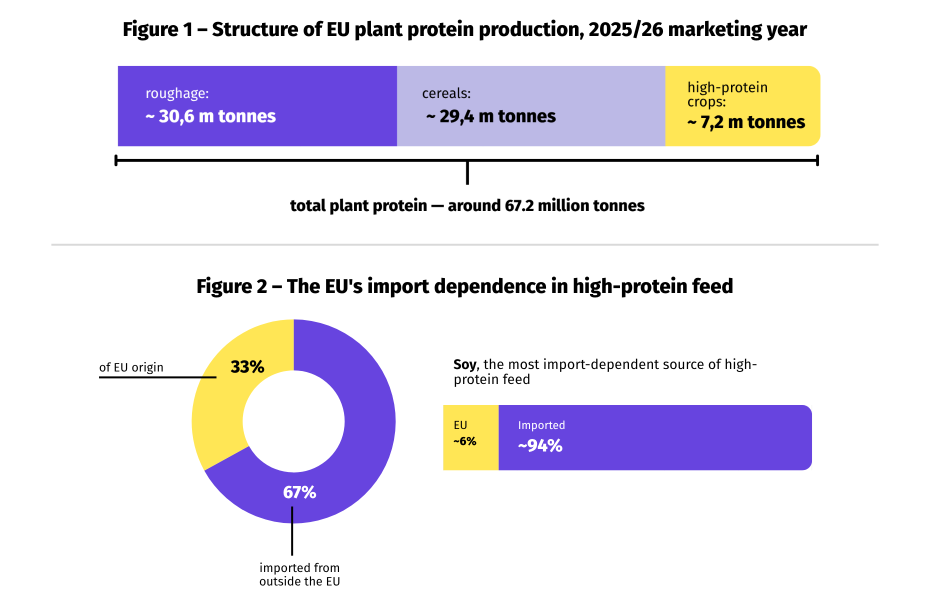
Soy is a case in point — a high-protein crop where dependence is especially acute: EU countries import 94% of their soy protein. Europe's vulnerability is compounded by the concentration of global markets — just six countries produce around 90% of the world's soy.
In its strategic documents, the EU sets a target of reducing its dependence on external supplies in order to strengthen the resilience of its food sector. Alongside increasing its own production of plant proteins, it plans to diversify its sources of imports. In this context, Ukraine is explicitly named as a strategic partner that could play a larger role in supplying Europe with plant proteins.
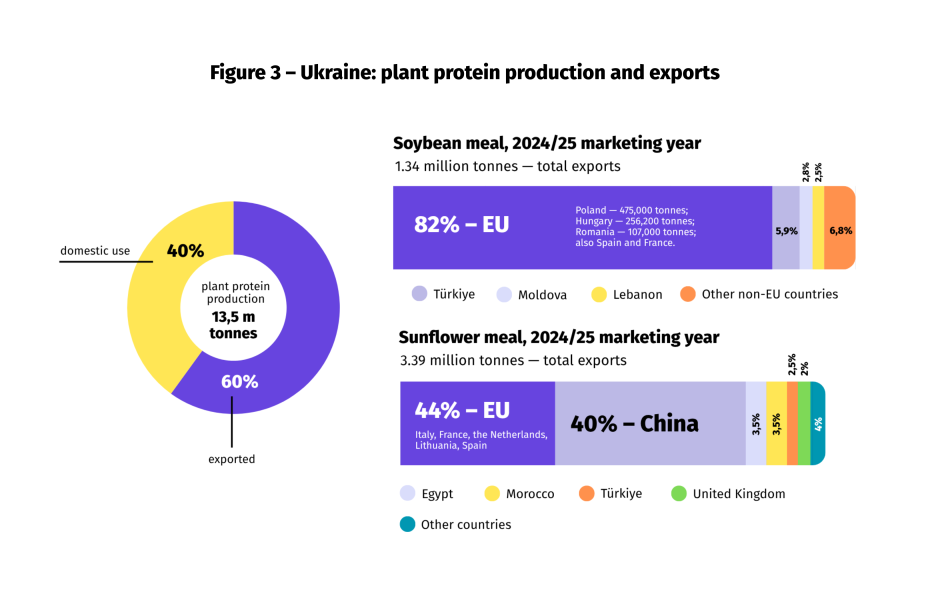
Ukraine is already a significant producer and exporter of plant protein. Soybean meal goes mainly to the EU, while much of its sunflower meal is sold to China.
The note sets out priority segments for plant protein production — from soy protein concentrate, the readiest to scale up, to products from the processing of peas and sunflower.
The Ukraine Facility Platform invites stakeholders to discuss how to turn Ukraine's existing raw material base into competitive production.