UA
UA 

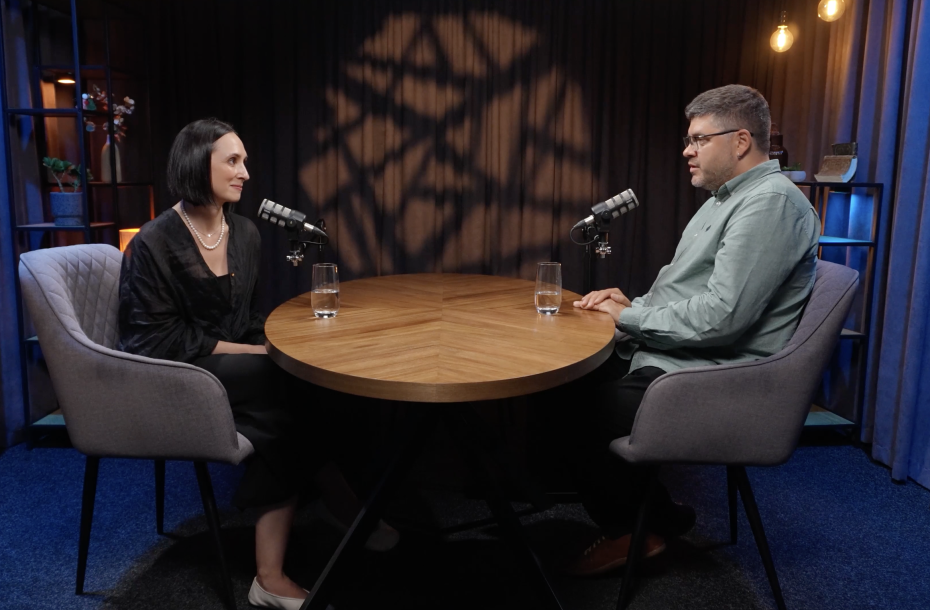
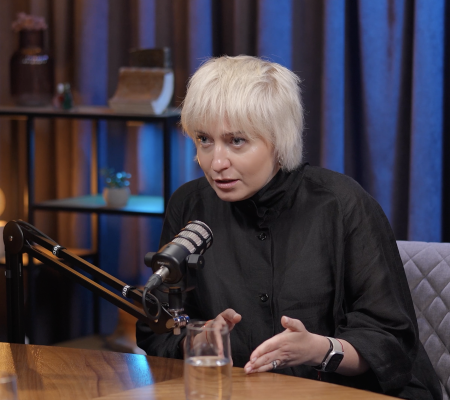
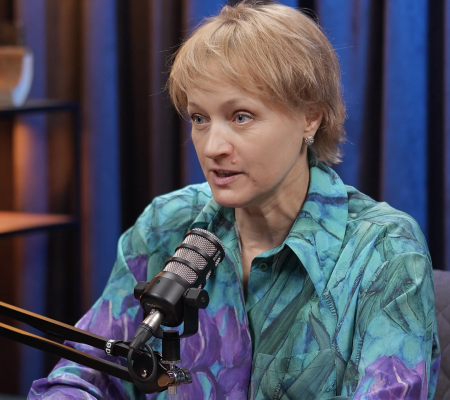
Russia is not only striking military targets and critical infrastructure — it is also targeting Ukrainians' trust in one another and in their government. The ability to pull together and act as one may be the key response. Roman Vybranovskyy, a co-founder at the Ukraine Facility Platform, and а host Iryna Prokofieva discussed the aims behind Russia's physical and hybrid attacks in Ukraine and Europe on the UAFP's podcast. What cognitive warfare is, and which methods Moscow employs to divide Europe — in the latest episode.

Russia's goals in Ukraine
Russia has mastered a new technology: Shahed drones have started to work as cheap missiles, and these jet-powered drones are harder to shoot down. But there is nothing fundamentally new here — it is simply the latest turn in the war's technological evolution. Kyiv's situation, though difficult, is markedly different from that of the front-line regions, because guided aerial bombs (KABs) do not reach the capital.
Russia's aims are to create the impression that it is winning, to hit military targets and to drive fresh waves of Ukrainian emigration ahead of winter.
It is worth remembering that whatever Russia destroys will be rebuilt. Ukraine's critical infrastructure now largely runs on a strike-and-repair cycle.
Rebuilding, though, gets little attention on social media, which is dominated instead by the pessimism the enemy actively fuels. This is a familiar Russian tactic: the moment strikes hit energy facilities, the claim spreads online that the government — not Russian shelling — is to blame for the outages. This is a hybrid attack. And AI has made generating such content far cheaper.
Russia cannot convince people that the government is to blame for the blackouts. What it can do is erode trust — in the authorities and in each other — until you trust no one. Moscow is skilled at striking the very foundation of what we believe. This is cognitive warfare.
Our strength is that we do not trust the authorities blindly: we scrutinise them, and we push back hard when corruption comes to light. But Russia takes it further, pushing a sweeping conclusion — if one official is corrupt, then supposedly the whole government is; if one soldier behaves badly, then they all do. The moment the message becomes "everyone is bad", that is the tell-tale sign of outside influence.
Ahead of winter, brace for the worst-case scenarios
UAFP analysts do not expect any significant change in Russia's tactics: as before, it will target critical infrastructure, in particular the power grid and generation facilities. This year, the water supply may also come under attack — a considerably worse prospect.
Russia has expanded its arsenal of weapons that Ukraine cannot shoot down, so the damage could be far greater than before — unless Ukraine and its partners quickly find effective ways to intercept ballistic missiles and jet-powered Shaheds. Meanwhile, state-owned utility Ukrenergo and private companies are preparing to repair the damage. The key question is who will be faster.
So it makes sense to plan for the worst, and to think through what to do if there is no electricity, heat and water.
Perhaps the priority is to act where we can and focus on what lies within our control. Winter is something we can prepare for together — with our neighbours or our building's co-owners' association (OSBB): checking the pipes, bringing in an expert to cut heat loss. And having done something ourselves, we've earned the standing to ask the head of our community (hromada), or our mayor, what they have done. There's real value, too, in joining with like-minded people to bring important projects to life together.
How Russia is dividing Europe through hybrid attacks
Division is also a goal of Russia's hybrid attacks in Europe. The known cases already include propaganda, support for various political forces, sabotage, explosive-laden drones at airports and cyberattacks. In this way Russia can test how EU countries respond to a given threat, train its own operatives and probe the strength of the ties between different stakeholders. It is trying to find out what happens when it steps up the pressure — how people who normally deal with one another only by email and at events arranged well in advance will actually coordinate.
Russia's aim may be to get every player in the EU to look out for itself first and be in no hurry to unite. It tries to intimidate businesses, parties and other organisations one by one, so that they never even consider joining forces to resist.
Russia also exploits the workings of democracy. Debate, for instance, is good for democracy — but when an internal dispute starts to matter more than any other issue, Russia steps in to deepen the divide and escalate the confrontation between the sides.