UA
UA 

Why are current electricity tariffs a debt trap? And who will ultimately pay for the energy market's debts?
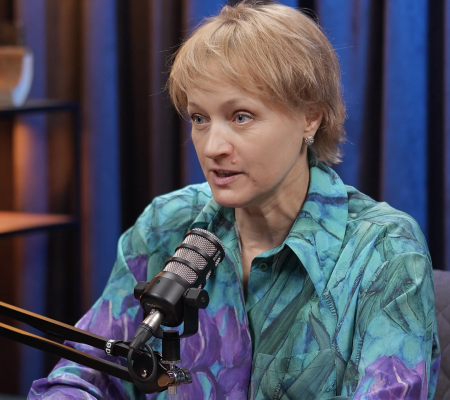
These are the questions Iryna Prokofieva explored with Oleksandr Vizir, Energy&Climate sector lead at Ukraine Facility Platform, in a new episode of the UAFP.Live podcast. The conversation covers tariffs, the hidden cost of electricity, and the mounting debts across Ukraine's energy market — and what this means for the country's reconstruction and long-term development.
Here are the key takeaways.

There is an iron rule in energy: the consumer always pays — the only question is when and how much.
Artificially suppressed tariffs don't cancel this logic; they simply defer payment. In effect, we are consuming an energy resource built during the Soviet era. When it runs out, the bill will be far higher.

Cheap electricity "for everyone" is not social justice. The owner of a house with a swimming pool and an elderly woman in a one-room flat pay the same price per kilowatt. Justice means targeted support for those who need it — not a subsidised tariff for everyone.
Energoatom generates roughly half of the country's electricity, which in itself creates a market problem. A single player controlling that volume of supply objectively affects pricing. At the same time, Energoatom carries a social function: formally, it is the entity that covers the gap between the market price and the subsidised residential tariff. To do that, it needs money. And it earns money by selling electricity on the market at high prices. Whether this constitutes fair pricing is a question that should be resolved by an independent energy regulator.
The debt problem is a direct brake on new generation capacity.
New projects are being built primarily "off-market" — directly for specific consumers rather than for the general market. Foreign investors who could finance construction cannot understand how to operate in a system where payments take at least a year to return. Without resolving the debt problem, talk of an investment boom in Ukraine's energy sector will remain just that.
The government is addressing the debt through special accounts. The mechanism is straightforward: a debtor opens a dedicated account with restricted usage, and incoming payments are automatically distributed among creditors according to a set algorithm. This prevents new debts from accumulating. But for the system to genuinely work, something else is needed: a clear link between the decision "not to disconnect" and accountability for whoever made that decision. Without an incentive to pay, the mechanism won't change the underlying logic.