UA
UA 

Energy transformation and energy security are two sides of the same coin, says Fatih Birol, Executive Director of the International Energy Agency. Ukraine would do well to adopt this approach – because how countries respond to the current crisis will determine whether Ukraine and Europe can build lasting resilience in the medium and long term.
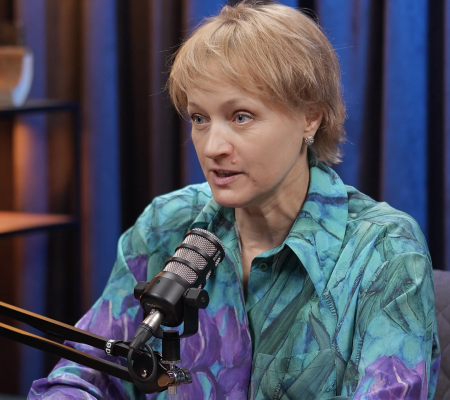
What opportunities does Ukraine have, and which European approaches are worth adopting? The latest episode of UAFP Live features Mariia Tsaturian, Chief Communication Officer at Ukraine Facility Platform.
How Europe is responding to the energy crisis
Europe's gas storage facilities are currently 28% full, and the continent needs to inject 60–70 billion cubic metres before winter. The conditions are challenging: forward prices at the Dutch TTF hub – Europe's key gas benchmark – have already exceeded €700 per thousand cubic metres. This summer, Europe and Asia are likely to compete for liquefied natural gas, as tankers quickly redirect to whichever port pays more.
In response, Europe is accelerating its green transition and pushing to electrify sectors that currently run on gas: heating, industry, and transport. This approach addresses not only the immediate crisis triggered by the blockade of the Strait of Hormuz, but also strengthens Europe's energy resilience over the medium term.
How much gas Ukraine needs before winter
Ukraine ended the winter with 9.5 billion cubic metres of gas in storage – more than the previous year. But this figure is not the result of a well-planned strategy. It reflects the destruction of gas-fired power plants by Russian strikes, which simply left less gas to burn.
The government has officially set a minimum injection target of 13 billion cubic metres for this year, with a maximum target of 14.6 billion. These volumes would be sufficient to get through the winter, even accounting for limited gas-fired electricity generation.
Does Ukraine have a strategy?
Ukraine is sending contradictory signals to businesses and investors. On one hand, the government invites private players to build distributed generation capacity in regions. On the other, it abruptly withdraws the incentives that were meant to attract them in the first place. It is as if someone handed you a car, asked you to drive urgently from A to B – and then, mid-journey, started pulling off the steering wheel, unscrewing the wheels, and draining the fuel tank.
At the same time, during a visit to Bulgaria, the President confirmed Ukraine's intention to complete the construction of new reactors at the Khmelnytskyi Nuclear Power Plant using ageing Soviet-era equipment. Yet nuclear generation takes at least ten years to build.
Does Ukraine have a strategy? Right now, the country prepares for the next winter as if it were the last one.

Why blackouts returned in spring
Russian strikes have severely damaged Ukraine's thermal and hydroelectric power plants. Estimated losses range from 6 to 9 GW – comparable to the total electricity consumption of the Netherlands in certain seasons.
Scheduled maintenance at nuclear power plants has also begun and cannot be postponed, as reactors need to be refuelled for the coming winter. Two units are currently offline for repairs, and a third is expected to follow shortly.
Solar generation covers daytime demand, but consumers feel the gap the moment weather turns cloudy. When temperatures dropped briefly ahead of Easter, rolling blackouts returned. The outages were the result of all these compounding factors – alongside certain regulatory decisions.


What triggered the gas generation crisis
Businesses that had planned to build gas-fired generation are putting their projects on hold. Owners of newly installed gas units are only switching them on during certain hours. What is holding back the development of decentralised generation?
The key advantage of gas-fired generation for the power system is its flexibility – these plants can ramp up quickly and cover the morning and evening demand peaks.
The problem is that the state abruptly changed the operating conditions for gas units. Previously, owners of such generation could buy gas at a subsidised price, with the state-owned Naftogaz covering the difference. In February, Naftogaz informed operators that gas would henceforth be priced at market rates – with the change backdated by two weeks, meaning operators were also billed retroactively for the imbalance.
During the same period, the energy regulator reviewed the price caps on the electricity market and lowered them.
In short, the state raised the cost of the input and cut the price of the output. It is no surprise that investors feel deceived.
How to build new generation capacity quickly
Ukraine Facility Platform has developed a concept based on the low-hanging fruit principle – focusing on readily available, easy-to-implement solutions. Municipal utilities in Ukraine – water utilities and district heating companies in particular – have significantly more connected capacity than they actually use. These entities can connect small-scale generation, paired with energy storage, to their internal grids, obtain the status of an active consumer (a regulatory mechanism that allows on-site generation and grid export), supply their own electricity needs, and feed surplus power back into the network.
The active consumer mechanism can be used to quickly connect generation equipment provided by donors, or to develop projects in partnership with private businesses.
Such projects remain rare, largely because of the lack of trust between businesses and local authorities. Without the ability to build that cooperation, this approach cannot be scaled.
It is not a silver bullet – but even partial application of the active consumer mechanism could help secure critical infrastructure and prepare Ukraine for not just one, but several winters ahead.