UA
UA 

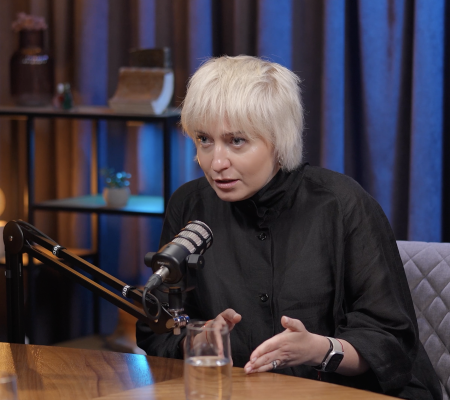
The so-called peace talks around Ukraine may look like political theatre staged for US President Donald Trump, but they still leave room to believe we could stop the hot phase of this full-scale war. Europe seems to be waking up after Davos and Munich. It is learning to live without its transatlantic crutch, yet it still lacks a clear strategy and credible leadership. So what domestic failures make both Ukraine’s next winter and the path to the EU so risky? Lana Zerkal, a member of the Ukraine Facility Platform Coordination Council, said this in an interview on the «Ye pytannia» channel.
Imitation for Trump. Peace talks as an intellectual exercise
These peace talks look more like a grand imitation than a real process. But Ukraine cannot opt out. We have to sustain the momentum that US President Donald Trump has set. For Russia, this is also an exercise – something they do not to lose Trump’s favour. If there is one positive, it is this: the Russians had to fly to Europe for nine hours. That tells you no one really wants to host them.
What matters to us is that Ukraine’s allies are in the room. Europe now treats this process as part of its own agenda. They care about the outcome because we sit in the same boat.
The appearance of Vladimir Medinsky, who led the Russian delegation, signals that nothing has changed. You can move Russia’s position only with very hard instruments – and Trump is not ready to use them.
This winter, Russian President Vladimir Putin smashed Ukraine’s energy system during the harshest cold snaps and faced no meaningful consequences. That looks like a blank cheque for his next moves. Putin keeps pushing every boundary, while Europeans still worry about how he might react if they give Ukraine Taurus missiles.

Europe is learning to live without the US
Davos – and everything that happened in the run-up to it – felt like the real turning point. Trump’s claims over Greenland and Europe’s response set the tone for this year. European unity on that issue even surprised Trump, who ultimately backed down. Europeans acted calmly and consistently: they kept reducing their dependence on the US and built internal coalitions to strengthen their resilience and their ability to operate without the United States.
Munich became a tighter, more concentrated sequel to Davos. The applause for Marco Rubio surprised me, because he simply repeated what J.D. Vance had said a year earlier: national interests trump rules and the rule of law, and the climate agenda is evil. Still, his speech made one thing clear: the United States does have a strategy.
No European speech, however, offered a coherent sense of Europe’s own strategy – how it plans to live without transatlantic unity. It also remains unclear who will lead Europe into the future. French President Emmanuel Macron is a figure of the past. German Chancellor Friedrich Merz does not yet have the political weight to steer the whole continent, even though Germany remains the principal donor to the EU budget.
The road to unity: can the EU pull together under pressure?
2026 will show whether Europe can build strong, viable internal alliances. For now, shares in financing matter more than political unity – even as the scale of the challenges makes unity essential.
The West has to rethink how the European Union and the European Commission function. Today, they operate like a huge, bureaucratic machine that cannot pick up speed. To accelerate, Europe will have to shed the ballast of regulation and internal barriers built up over years to protect domestic markets. That will test the system, but it may also give European economies a real chance to compete with both the United States and China.
EU countries already move faster. Ambassadors used to meet at most twice a week; now they meet daily. Brussels takes decisions without endless consultations. Trade agreements now run in English – without translating into 27 languages.
Even with that push, Europe will struggle to define its policy towards other trading partners. China increased exports to Europe by 20% last year and is effectively taking over the car market, especially EVs, where Europeans cannot match Chinese prices.
The EU therefore has to diversify markets and lower protective barriers. After 20 years of negotiations, it reached a deal with India. Latin America and other regions remain next.
Ukraine in the EU by 2027 is for people who do not understand what accession actually means. This is not only about laws. It is a shift in paradigm – how the state works as an institution: courts, law enforcement, regulators, administrative decisions. Under today’s system, we will not survive in the EU even if we mechanically copy EU norms into Ukrainian legislation.
We still think we can live without rules, with corruption – and still enter the EU. That will not happen. Parliament barely votes through alignment reforms, and people often label the independence of institutions as «external governance». But EU membership is precisely a conscious limitation of manual control – and it truly reduces the space for corruption.
Not corruption, but treason: the price of inaction in the energy sector
«Mindichgate» is a small piece of a massive iceberg hidden under water. I resigned from the Ministry of Foreign Affairs in December 2019 because I understood I could not shape policy from the inside.
After four months as an adviser to former Energy Minister Herman Halushchenko, it became clear that his work was a farce. He claimed he wanted reforms and market-based approaches in the electricity sector. But the changes to Ukrenergo’s charter and the push to install his people on the management board showed the real goal: to seize control of the cash flows. Then they cancelled the gas market. It became obvious that no one intended to play by the rules. The only goal was to profit from the energy sector while hiding behind slogans.
At the same time, I remain grateful that I was part of the Ukrenergo team that worked on synchronising Ukraine’s power system with Europe – an essential step for energy security and grid stability.
The worst part now is that we do almost nothing to strengthen and decentralise Ukraine’s energy system. Donor equipment with nearly 1 GW of capacity sits behind fences because no one bothered to connect it, while officials talk about building new nuclear units.
I find it striking that the actions of the «Mindichgate» figures are still treated as corruption rather than treason. I believe they bear no less responsibility for Ukraine’s catastrophic energy situation than Russia does.
Are we sure winter preparation will look different this year? No. They have already announced that the winter plan must be ready by the end of August. A plan – not a system. And when will the system start preparing? From August there is nothing left to change.